
How to Make Wool Blend Flat Brim Streetwear Caps with 3D Embroidery
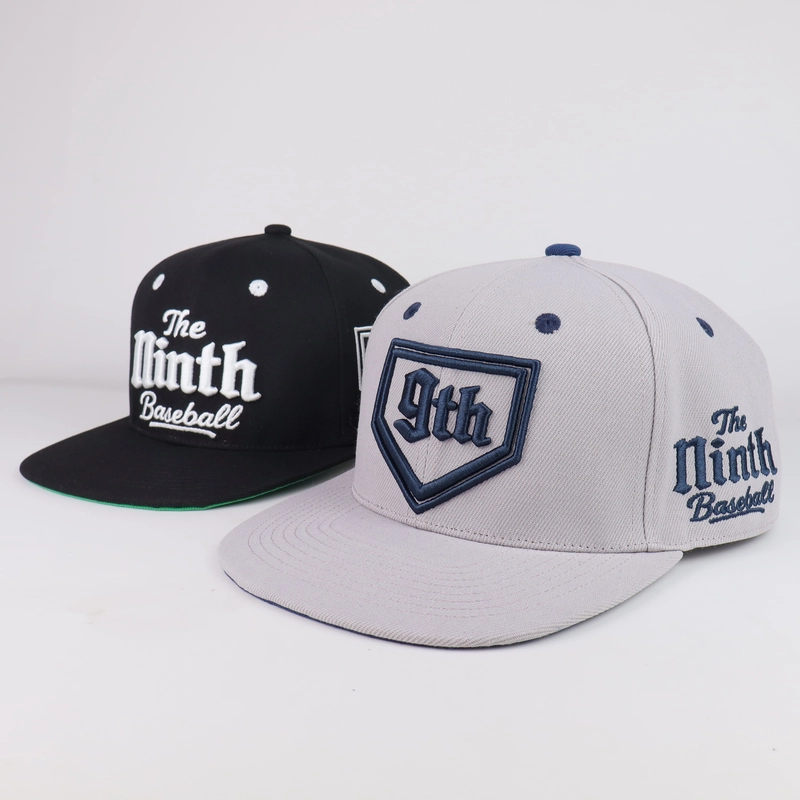
Just finished these black and grey flat brim caps for a streetwear brand in LA. They wanted the classic hip-hop silhouette — high crown, flat brim, wool blend fabric. But they also wanted a 3D "9th" logo on the front and a 3D embroidered text on the side. Honestly, putting 3D puff embroidery on a wool blend fabric is a headache for most factories. Here's how we did it, and why the details matter if you're trying to sell a premium cap.
1. Why Wool Blend is Tricky (and Why It's Worth It)
Most cheap flat brims use acrylic or cotton twill. It's easy to work with, but it looks flat. For this order, we used a wool blend fabric. Wool gives the cap a rich, matte texture that streetwear brands love. But wool also shrinks when it's exposed to heat.
When we do heat transfer printing or steaming on wool, we have to control the temperature strictly. If the factory worker walks away for 10 seconds too long, the panels shrink by 2%. And a 2% shrinkage means the hat won't fit the plastic closure or the crown structure anymore.
2. 3D Puff Embroidery on Wool: The Tension Problem
Look at the white "The Ninth Baseball" text. That's 3D puff embroidery with 2mm foam underneath. On normal cotton, the needle tension is standard. But on wool, the fibers are looser.
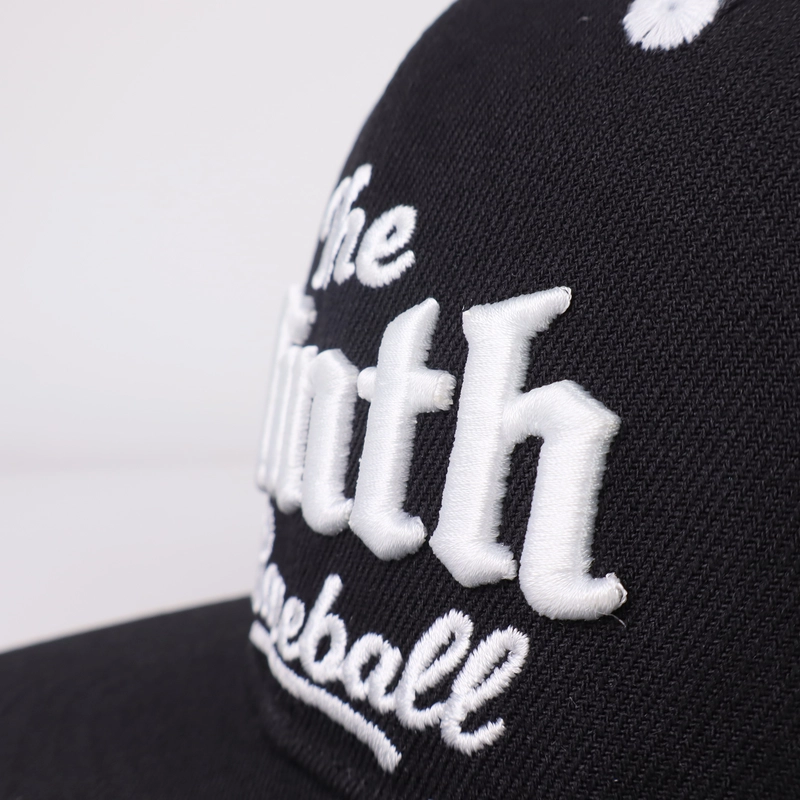
Look at this close-up. Every stitch has a precise angle to make sure the thread sits tight and clean on top of the foam. If the needle tension is off by even a little bit, the thread will unravel or the foam will pop out of the sides. We use a sharp needle to pierce through the wool cleanly without pulling the fibers out of the weave. Plus, the team spent hours hand-trimming the excess foam around the letters — you can't machine this part.
3. The "9th" Patch with Edge Binding
On the grey cap, the front logo is a patch, not direct embroidery. The base fabric is a heavy twill, and we embroidered the "9th" logo on a separate machine. Then we did the edge binding (also known as a merrowed edge) — that thick, raised border around the patch.
Why go through the trouble? Because a cheap patch with a raw cut edge will fray in the wash. The edge binding locks the fibers together. It costs more and takes an extra 15 minutes per hat, but it's the difference between a $5 hat and a $25 hat.
4. Colored Undervisors and the Hip-Hop Aesthetic
Notice the black cap has a green undervisor, and the grey one has a blue undervisor. In the streetwear market, the "hidden" detail on the underside of the brim is a big deal. It gives a pop of color that people only see when you look up.
To do this, we don't just dye a whole piece of fabric. We cut the brim fabric separately, pre-assemble the sandwich brim with the colored under-fabric, and then stitch it to the crown. This ensures the colors don't bleed during the washing process.
5. The Flat Brim Structure
A flat brim needs to stay flat. We use a thick buckram interlining inside the front panels and a plastic visor board inside the brim. After sewing, the cap goes through a steam press to set the shape. If the visor board is too thin, the brim will curl up in the box during shipping.
If you're a brand looking for a factory that actually knows how to handle wool, 3D puff embroidery, and edge-bound patches without messing up the details, send me a message. We'll walk you through the sampling process.
Have a Cap Design or Reference Sample?
Send your design files or your reference sample. We will help you define the next development step and give you a factory-direct quotation.
Chat with our team on WhatsApp