
In this development note, it means a cotton six-panel cap built around a visibly shorter visor than a conventional baseball-cap proportion. The exact brim length is not claimed here because these photos do not provide a measurement. On a physical sample, the visor has to be judged together with crown height, panel shape, width and curve.
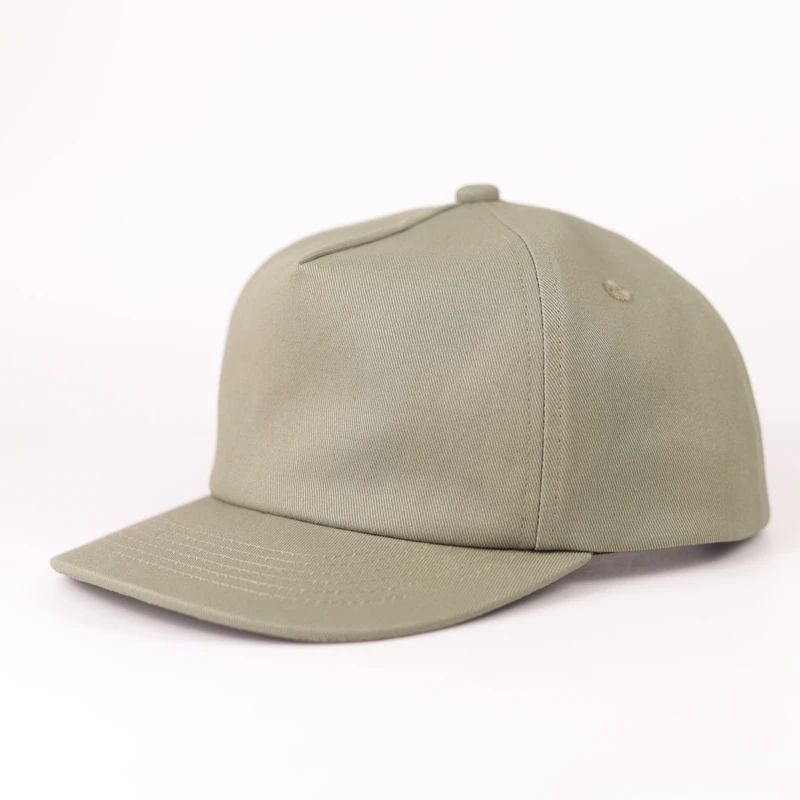
The samples photographed here are cotton short-brim caps in a six-panel construction with an adjustable plastic snapback. They are deliberately plain: no front logo, no patch and no printed artwork. That makes the pattern easier to read. You can see the front seam, side panel shape, rear opening, visor proportion and the way the cotton shell holds around the crown without decoration hiding any of it.
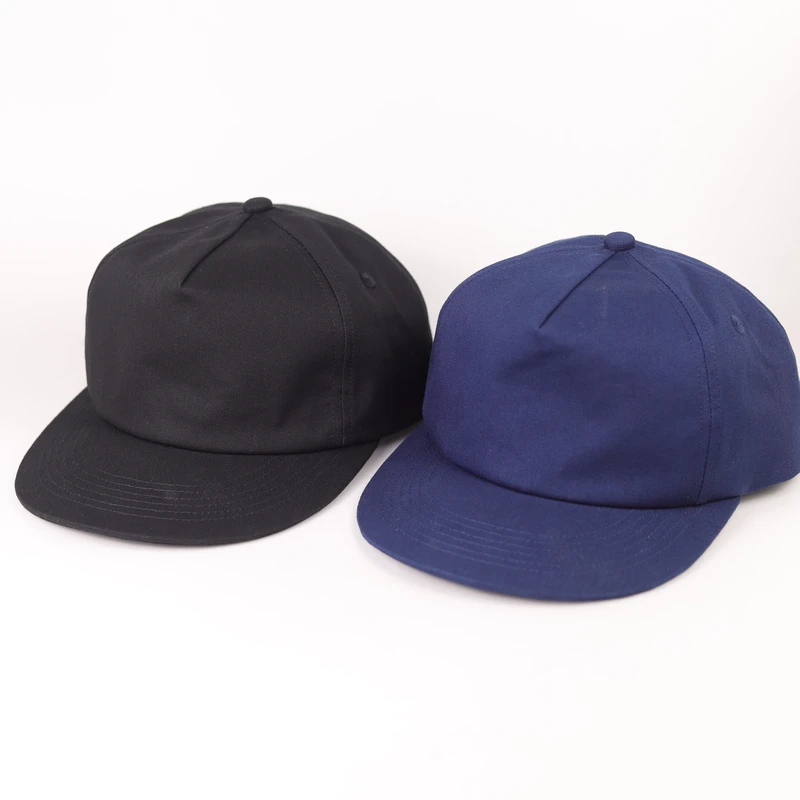
The fabric changes how the same outline reads
Cotton does not behave like a lightweight nylon shell. It has more body, so the crown reads as a clearer shape instead of collapsing as easily. On these samples, that makes the transition from the front panels into the short visor quite obvious.
That extra body is useful for a casual or streetwear direction, but it also makes small pattern decisions easier to notice. A crown that is a little too deep can look bulky. A visor that is too wide can dominate the front. A low-profile pattern therefore still needs to be balanced rather than created by shortening only one part.
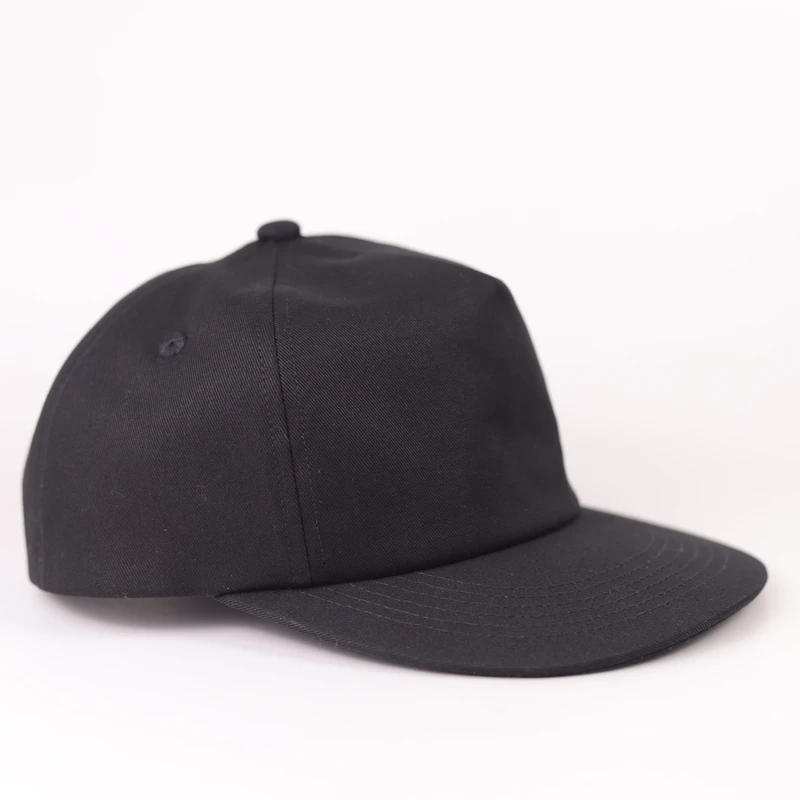
Does six-panel mean low profile?
No. These caps use a six-panel crown, which tells us where the seams run and how the crown is divided. It does not tell us whether the cap will sit high, low, deep or shallow on the head.
Those fit decisions come from the pattern: front height, side-panel depth, rear-panel shape and the lower edge around the opening. When a buyer asks for a “low-profile six-panel”, we still need to treat low profile and six panel as two separate instructions.
What the physical samples actually verify
All construction observations on this page come from the photographed samples. They directly show a six-panel shell, a short visor, stitched eyelets, a rear plastic snap closure, internal seam tape and a sweatband. They do not provide an exact brim measurement or fabric weight, so those values are deliberately left unspecified rather than estimated from appearance.
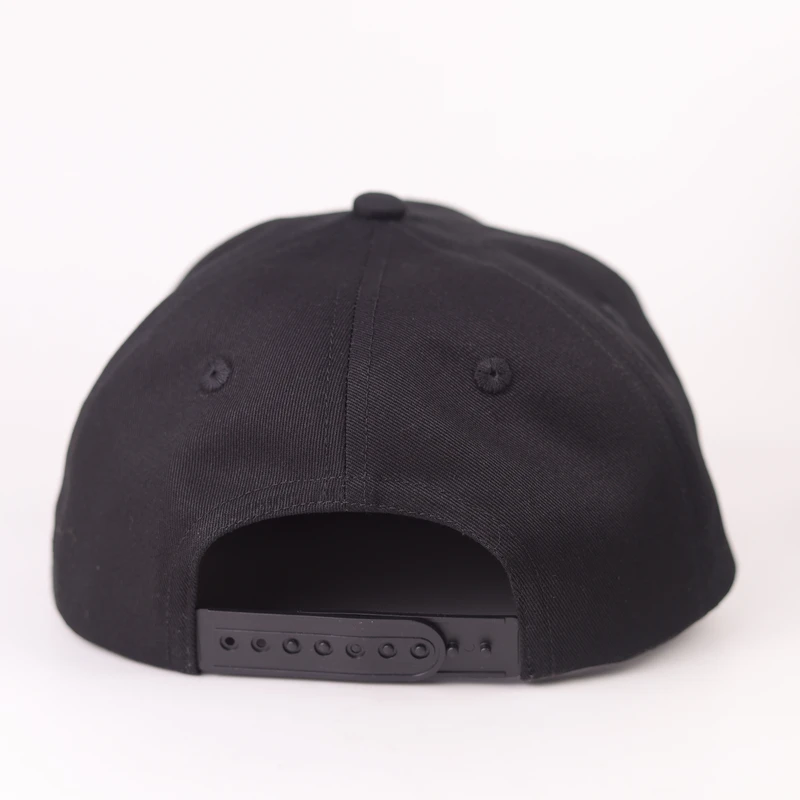
The rear opening affects more than adjustment range
The snapback does the obvious job of adjusting circumference, but the size and position of the rear opening also affect how the cap sits at the back of the head. The opening, rear panel depth and lower edge need to work as one shape.
For a clean short-brim style, this is worth checking from the back before approving the sample. If the rear panels are too deep, the cap can feel visually heavier than the front suggests. If the opening is pushed too high or too low, the fit can look unbalanced even when the circumference is correct.
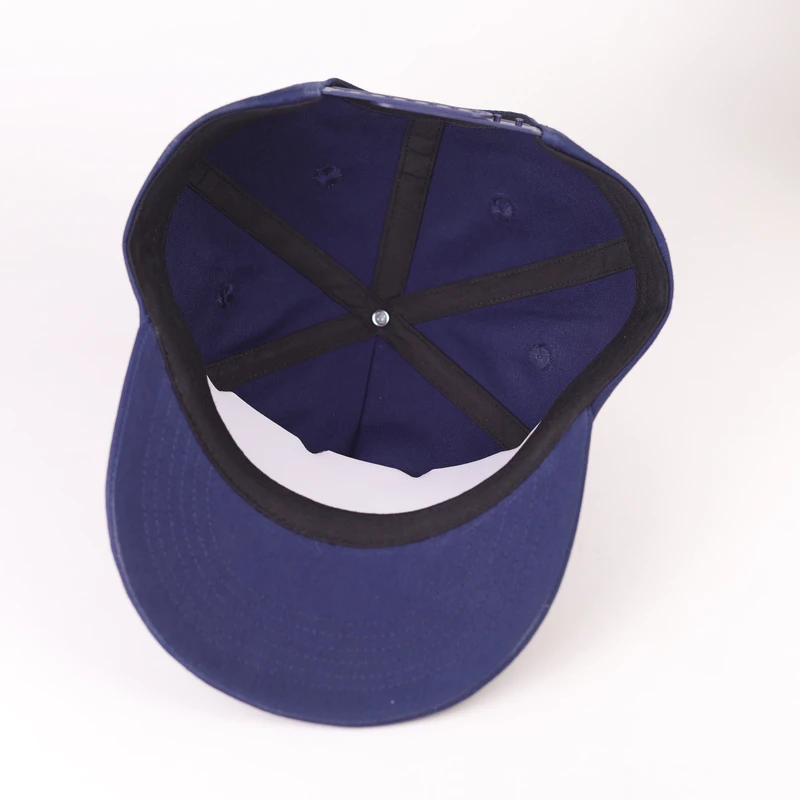
Inside finishing is part of the sample approval
The inside view is useful because it shows the construction that is easy to miss in a styled product photo. Seam tape covers the crown seams, the sweatband runs around the lower edge, and the eyelets are finished through the individual panels.
For development work, this is where we check whether the inside feels intentional rather than simply complete. Tape width and alignment, sweatband attachment and the neatness around the rear opening are small details, but they are repeated on every unit in bulk production.
Color can change the way the structure is perceived
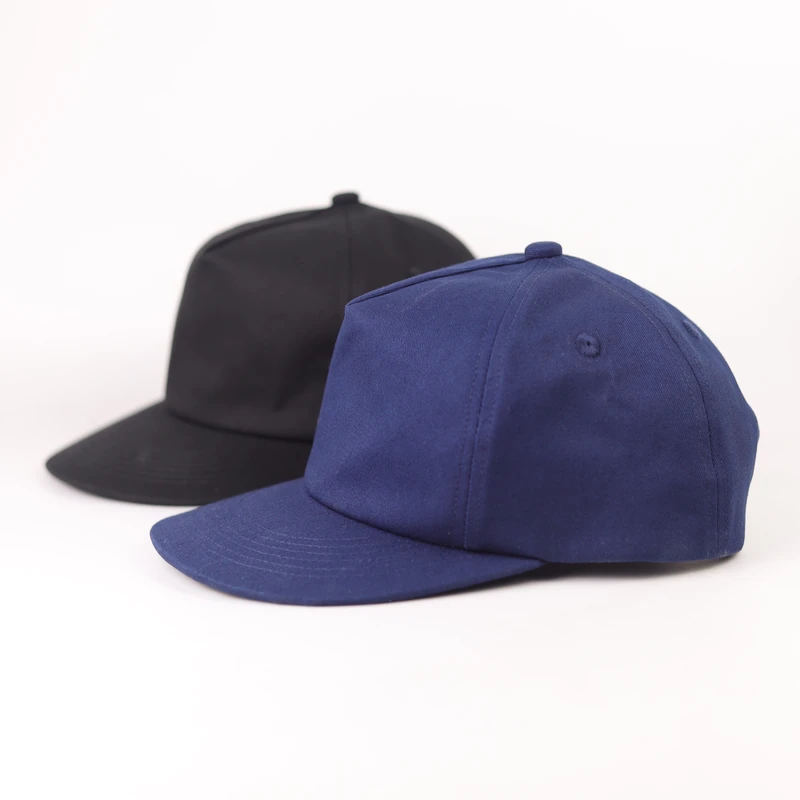
The pattern is the same, but dark and light cotton surfaces do not read exactly the same in photographs or on a shelf. The khaki sample shows panel seams and fabric texture more clearly, while black hides more of the construction at first glance.
That is one reason a color approval should not replace a fit approval. The fit should already be right in the physical sample; color comes after that rather than compensating for shape.
What should be approved before bulk production?
If the style is being developed from a reference cap, we would also record which parts are meant to stay the same and which are intentionally being changed. “Use this cap as a reference” is not precise enough on its own when the brim, crown height, closure or fabric are all open to adjustment.
Common questions about this cotton short-brim shape
Is a short-brim cotton cap just a normal baseball cap with a shorter visor?
Not always. The shorter visor changes the visual balance, so crown depth, visor width and the side profile still need to be checked together.
Does six-panel mean low profile?
No. Six-panel describes the panel construction. Crown height and depth are separate pattern choices.
What should be approved on the physical sample?
At minimum: crown profile, visor proportion and curve, rear opening and closure position, cotton specification, internal finishing and the final decoration position if a logo will be added.
Related development notes
Sample note: the photographs show physical cotton cap samples supplied for this development note. No exact brim length, fabric weight or commercial specification is claimed where it is not visible or provided.